

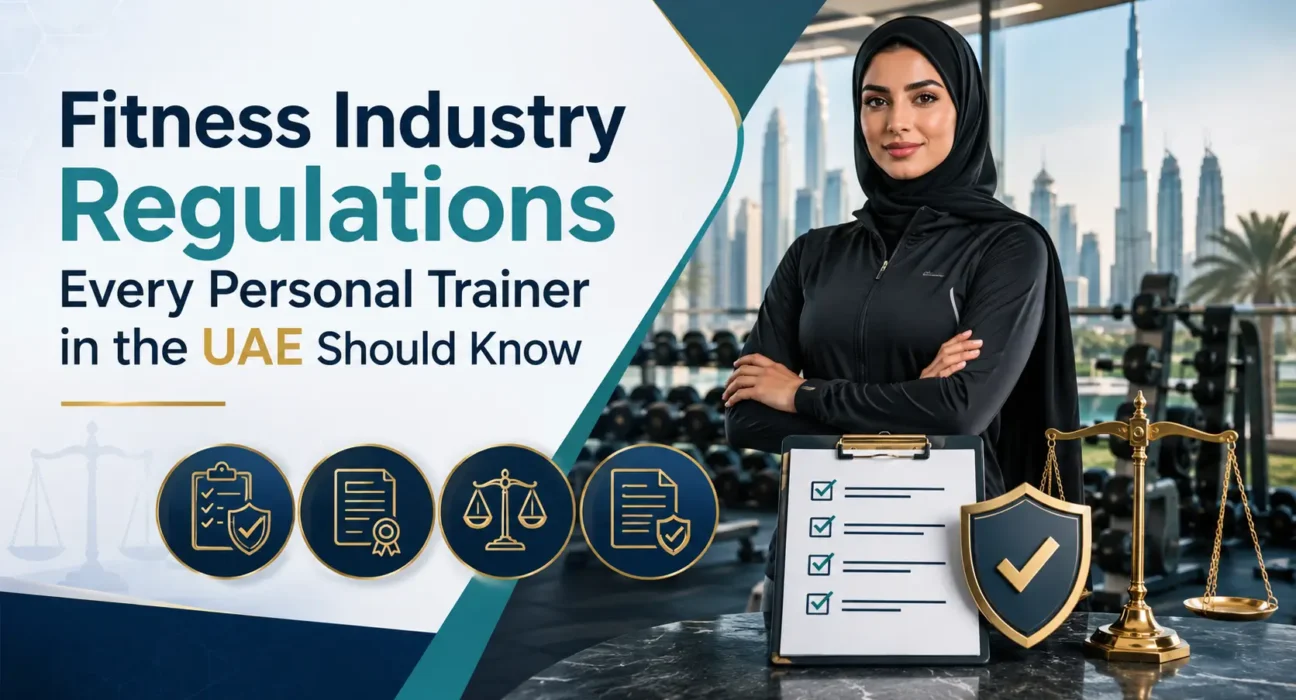
The fitness sector in the United Arab Emirates is growing as more residents choose to lead healthier, wellness-oriented, and more active lifestyles. From 2020 to 2026, gyms and boutique fitness centres, wellness centres, and virtual coaching services will see increased popularity nationwide.
As such, the rise in demand in this fitness sector has also heightened the focus on regulatory compliance for fitness professionals. Fitness professionals who wish to work legally and professionally in the United Arab Emirates must understand the regulations governing their personal trainer licenses.
In addition to certification requirements, visa status, and virtual coaching, there are also regulations on client safety standards that fitness professionals should follow to work within predefined industry guidelines.
Get More Latest Info on UAEMood
Why are regulations important in the UAE fitness industry?
The entire fitness industry in the UAE operates according to established professional standards intended to protect clients and ensure quality services at gyms, wellness facilities, and independent coaching professionals.
Fitness professionals must obtain a valid personal trainer license before they can legally provide training services to others, which requires them to meet widely accepted operational and professional standards.
As the fitness industry continues to grow in competition, compliance with regulations will be a critical element in establishing credibility and ensuring career longevity.
Recognised certifications every trainer should have
One of the main requirements for trainers coming into the UAE market is to be professionally certified. Most fitness employers and fitness facilities want trainers to be internationally recognised as contractual professionals who meet professional competency and safety standards.
The most popular certifications generally accepted by fitness facilities in the UAE are NASM, ACE, ISSA, and REPs (internationally recognized qualifications). These certifications typically cover:
– Exercise science
– Anatomy and physiology
– Fitness programming
– Basic nutrition
– Client safety and injury prevention
Holding these certifications can improve employability because fitness facilities are familiar with the standards they represent.
Understanding the employment visa and licensing requirements
Fitness professionals who want to work in the UAE must have a legal means to operate under state law through an approved employment or business structure.
For employed trainers, gyms, or wellness companies, the employment visa process and labour approvals are generally managed. Independent trainers or freelance fitness professionals may require separate licensing structures depending on how they offer their services. A personal trainer license alone may not be sufficient if the operational structure does not align with UAE labour and residency regulations.
Health and safety responsibilities trainers must follow
Trainers have a huge responsibility to create safe programs for clients. Providing program access to clients is very important. Programs will be tailored to the client’s fitness level, health conditions, and other criteria. Many gyms also require trainers to maintain CPR and first-aid certifications as added assurance that there will be a response in case of emergencies.
In addition to general certification requirements, personal trainers must also adhere to the operational guidelines of:
- Equipment Safety
- Hygiene Procedures
- Injury Prevention
- Client Documentation
- Emergency Response Protocols
- Laws regarding freelance and online personal fitness coaching
With the changing face of fitness in the UAE, there are many more opportunities for personal trainers to perform their duties outside of a gym. There are now many trainers that provide private sessions, online coaching, virtual consultations, and subscription-based fitness programs.
Even though they operate outside traditional employment structures, personal trainers still need to obtain licensing and regulatory approval before conducting business. Each individual trainer may need to create a separate business to operate outside traditional employment structures, depending on their jurisdiction and the nature of their work.
When providing online training services, trainers must also ensure they comply with all UAE regulations governing advertising and business operations. As virtual fitness becomes more prevalent in 2026, compliance with all operating requirements of the UAE will continue to grow in importance.
Insurance and professional liability awareness
The fitness industry has experienced a significant increase in awareness of insurance and professional liability in recent years.
As a result, many gyms and wellness centres have developed operational policies on liability, including liability waivers for clients and injury prevention policies. In addition, independent trainers must evaluate the potential liabilities associated with their services and develop appropriate professional liability risk management plans.
By understanding how to manage operational risk effectively, trainers can create a more sustainable career in the UAE market.
How does SPC Free Zone support fitness entrepreneurs?
SPC Free Zone in Sharjah is committed to supporting entrepreneurs and service-based workers through flexible company formation options that enable them to grow their businesses.
By providing a process for businesses to register electronically, SPC Free Zone enables flexible licensing arrangements and modular operational models, giving entrepreneurs greater flexibility in creating a company that meets their long-term operational needs.
As fitness, wellness, consulting, or digital coaching professionals look to pursue new opportunities, SPC Free Zone provides entrepreneurs with simplified operational planning and operational flexibility for growth.
Conclusion
The continued growth of the fitness industry in the UAE will create many new opportunities for qualified. But long-term sustainability requires understanding the industry’s requirements in terms of regulations and compliance, and how to develop a successful business.
Trainers who have built a solid foundation for compliance with licensing, safety, coaching regulations and business structure will likely position themselves for long-term growth. SPC Free Zone continues to support the UAE’s growing fitness industry by providing flexible business setup solutions that enable professionals to efficiently launch and grow their businesses in the UAE.