


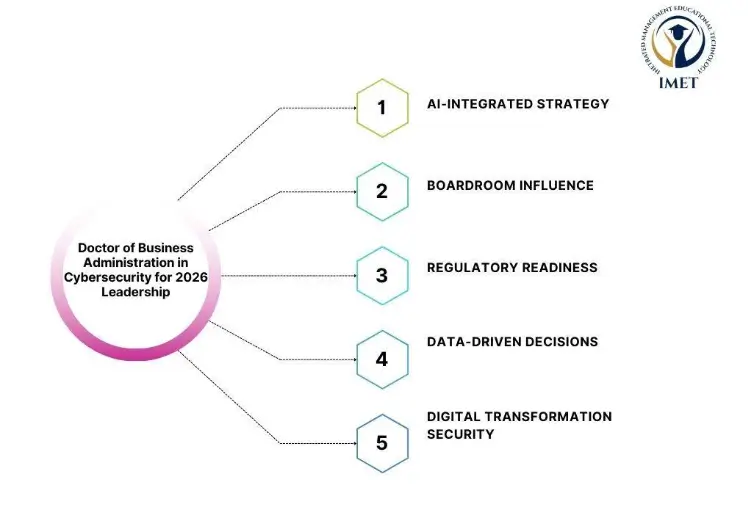
Cybersecurity will become a boardroom obligation at organizations after 2026, as security threats will exceed the capabilities of IT departments to protect against them. The need for organizational cybersecurity experts who handle advanced AI-based cyber threats, comply with new government rules, and handle international digital changes has become essential for organizations. IMET Worldwide’s Doctorate (DBA) in cyber security program cultivates digital-age leadership.
Existing Phd programs provide some value to security professionals, yet these programs do not equip them with the skills needed to make executive decisions, create organizational policies, or maintain business operations. The DBA in cybersecurity program enables organizations to solve this problem because it integrates advanced business strategies with practical cybersecurity management skills.
The Need for Business Intelligence in Cybersecurity Leadership
Cyber risks today directly affect four business areas, which include revenue and brand trust, legal compliance, and investor confidence. The requirement for leaders establishes that they must explain cyber threats to business stakeholders because technical education does not teach this essential skill.
An Online Doctorate of Business Administration (DBA) program equips cybersecurity professionals with:
- Strategic risk management skills
- Enterprise-level governance frameworks
- Financial and operational decision-making capabilities
- Leadership skills for cross-functional teams
The combination of these two elements establishes that a doctorate in cybersecurity now functions as a leadership credential instead of remaining an academic qualification.
How AI Is Changing DBA Programs and Cyber Education
The field of artificial intelligence currently transforms two domains, which include cyber threats and cyber educational systems. Advanced DBA programs now integrate AI-driven analytics, predictive risk modeling, and intelligent decision systems into their curriculum.
EdTech platforms provide essential educational services through their three main offerings, which include
- Virtual cyber labs powered by AI simulations
- Real-time case studies based on global cyber incidents
- Adaptive learning models tailored to executive learners
Through these innovations, DBA candidates can use their theoretical knowledge to handle actual cyber leadership situations, which helps them learn through practical experiences that prepare them for future challenges.
Cybersecurity Doctorate (DBA) vs. Phd programs
Professional Phd programs validate academic expertise. The Doctorate (DBA) in Cybersecurity program assesses how professionals affect organizations. Employers in 2026 seek leaders who possess skills beyond certifications. The required skills include designing cyber strategies that align with business goals and organizations, national policy, and secure digital transformation leadership. The existing workforce trends toward a cybersecurity Doctorate DBA program because they want to advance their careers more effectively than through it. The focus extends beyond tools to include decision-making power and governance structures.
Government Regulations and the Growth of Doctorate in Business Administration with a Cyber Focus
Governments worldwide are tightening cybersecurity regulations because of their need to protect data, govern AI systems, and safeguard essential infrastructure. Universities have developed new doctoral programs because online education policies have been updated to support industry needs.
Current policy trends show:
- Educational institutions now recognize online and hybrid doctoral programs
- The government needs cybersecurity experts who can lead national security efforts
- Research programs receive funding to create practical solutions for both industry needs and policymaking requirements
The demand for DBA programs with cybersecurity components has grown because working professionals and senior managers find these programs appealing.
New Developments in Online DBA Programs in 2026
Online DBA programs have evolved from their previous state as passive learning experiences to their current state, which now focuses on applied research, executive mentoring, and industry partnerships.
Key trends shaping DBA in cyber leadership include:
- Dissertation topics focused on cyber governance and AI risk
- Industry-sponsored research projects
- Peer learning with global cyber executives
- The learning models of educational institutions provide working professionals with flexible study options.
The DBA programs of academic institutions, which include globally recognized online universities and professional doctoral schools, establish new standards for cyber leadership education while maintaining academic standards.
Applied Research’s Function in Cyber Leadership
The applied research component serves as the primary element that distinguishes DBA programs from other academic degrees. DBA researchers investigate practical solutions that organizations face during their operational processes.
Cybersecurity professionals must investigate these specific research areas:
- AI-driven cyber risk management
- Digital enterprises achieve cyber resilience
- Multinational organizations establish policy compliance
- Leadership strategies for cyber crisis management
This research-driven approach empowers graduates to influence boardroom decisions and public policy alike.
A DBA in Cybersecurity is the first step
The increasing complexity of cyber threats requires business leaders to change their leadership methods because these threats now connect with their operational strategies. Cyber leadership in 2026 requires executives to demonstrate their digital risk management capabilities instead of their system knowledge.
The online DBA program in cybersecurity doctorate focus demonstrates this educational development. The program teaches students to develop long-term security solutions through their strategic decision-making abilities.
This Online Doctor of Business Administration program has become essential for professionals who want to shape government policies and develop organizational resilience and strategic direction.
Final Thoughts
The shift of cybersecurity responsibilities from technical operations to executive management requires leaders to develop new capabilities. The DBA program operating in 2026 will prepare professionals for leadership positions by providing them with a doctoral degree in cybersecurity. The IMET Worldwide’s DBA program develops future cyber leaders who will protect organizations through its combination of business intelligence, applied research, and cyber governance elements.