

Navigating the financial landscape of assisted reproduction can feel a bit like trying to read a map where the roads are constantly shifting. For couples in the Emirates who are trying to plan for a family, the initial medical vocabulary can feel dizzying. You hear terms like ovulation induction, sperm washing, blastocyst culture, and genetic screening tossed around during early consultations. Very quickly, the conversation shifts from clinical choices to a stark comparison between two primary paths: Intrauterine Insemination (IUI) and In Vitro Fertilization (IVF).
The immediate challenge for most families is figuring out why the price tag between these two paths varies so dramatically. On paper, it is easy to look at the numbers and feel a strong pull toward the more economical option. But looking at the upfront price tag in isolation often leaves couples exposed to hidden emotional and financial costs down the road. True planning requires understanding the exact clinical labor, technology, and medical science that goes into each dirham spent.
Deciphering the Two Pathways
To understand this deep structural price gap, we have to look at where the actual science takes place:
1. The Low-Tech Approach: IUI
Think of IUI as a highly coordinated, natural assistant. The procedure itself is relatively low-tech and minimally invasive. A specialist prepares a concentrated sample of healthy sperm in a laboratory and places it directly inside the uterus around the time of natural or induced ovulation.
A mild but necessary clarification should be made here regarding how a cycle is tracked. Many couples spend months at home tracking baseline ovulation symptoms, such as changes in cervical mucus or basal body temperature, to time intercourse. While these home-tracking methods are excellent for natural conception, a clinical IUI cycle replaces guesswork with precise ultrasound monitoring and trigger injections to ensure the insemination happens at the exact biological window. Because the medical intervention is lower, requiring fewer clinic visits and minimal lab work, the cost per cycle remains relatively accessible.
2. The High-Precision Approach: IVF
On the flip side, IVF is a multi-stage, high-precision operation where fertilization happens entirely outside the body. This is where the baseline IVF treatment cost in UAE clinics begins to reflect a massive leap in medical infrastructure. Instead of letting nature handle the meeting of the cells, an IVF cycle requires intensive ovarian stimulation to grow multiple eggs, a minor surgical retrieval under sedation, advanced embryology lab incubation, and a precise embryo transfer back into the uterus. The clinical resources, specialist time, and laboratory safety mechanisms required for this process are fundamentally more complex.
The Reality of the “Headline Price”
A common conflict within the fertility sector is the trap of the “headline price.” Many clinics advertise a low introductory rate for an IVF cycle to get patients through the door. The thing is, a standard baseline package often excludes the variables that actually make a cycle successful.
- Variable Medication Fees: The heavy medications required to stimulate the ovaries can vary wildly in price based on an individual’s hormone levels.
- Excluded Essentials: If your package does not include these injections, or if it charges extra for routine ultrasound monitoring, blood work, and mandatory embryology steps like Intracytoplasmic Sperm Injection (ICSI), the final invoice can look vastly different from the initial estimate.
This specific friction point is where the core philosophy of an institution like ART Fertility Clinics redefines patient care. True medical ethics relies on total, uncompromised transparency from day one. Instead of pushing low-cost, high-volume treatments that might not match a couple’s actual diagnosis, the approach centers on exhaustive, upfront root-cause testing. By evaluating both partners comprehensively before recommending a path, the medical team ensures you do not waste precious resources on an IUI cycle if an underlying issue like tubal blockages or advanced male factor infertility makes success statistically improbable.
Balancing Success Rates Against Lifetime Costs
When you look at specialized packages, a science-driven center will bundle the critical technological advantages directly into the upfront cost. At ART Fertility Clinics, an IVF package typically brings advanced laboratory standards into the baseline.
| Treatment Option | Success Rate (Per Cycle) | Medical Infrastructure Involved |
| IUI | ~15% | Basic sperm washing, localized uterine insemination, minimal lab intervention. |
| IVF | Significantly Higher | Surgical egg retrieval, complex embryology incubation, genetic screening (PGT), and ICSI. |
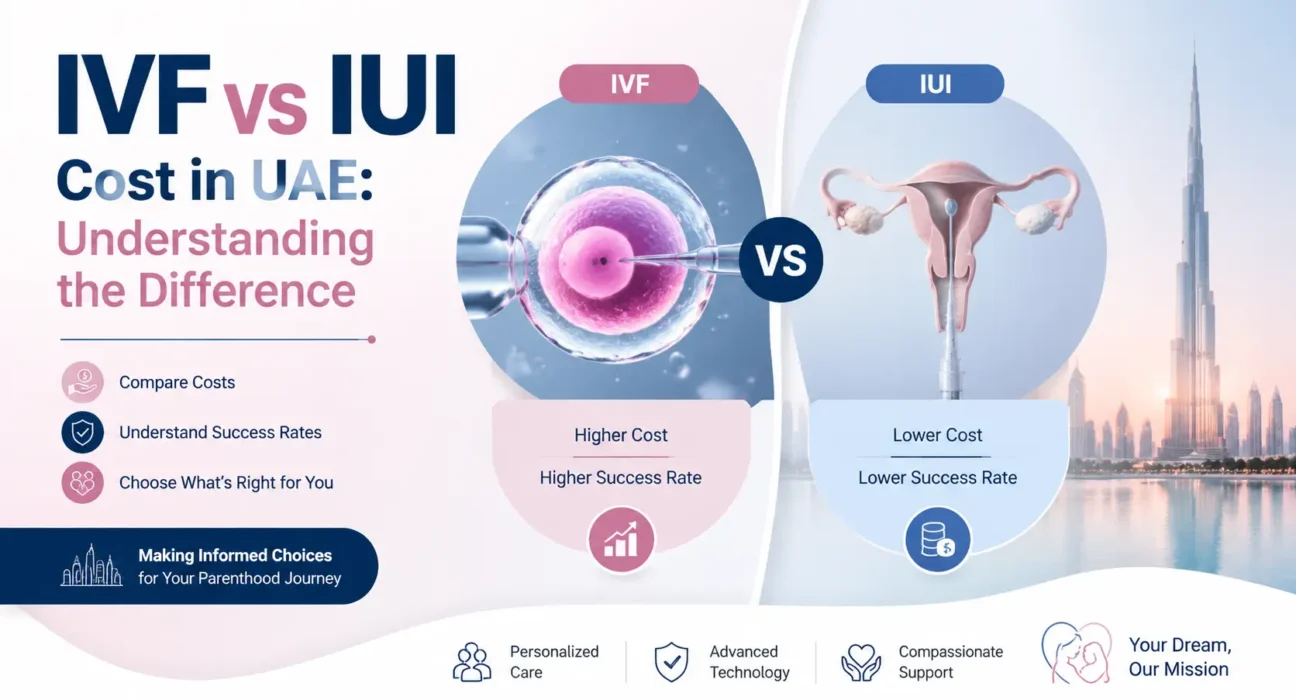
While a single IUI attempt is noticeably less expensive than an IVF cycle, its success rate per try is also significantly lower, usually hovering around fifteen percent. If a couple undergoes three or four unsuccessful IUI cycles, the combined financial outlay, paired with the emotional toll of repeated failure, can easily match or exceed the investment required for a single, highly successful IVF cycle backed by modern genetic screening.
Ultimately, choosing between these two standard procedures is not merely a matter of finding the lowest quote. It is about understanding the cumulative investment required to reach a successful live birth based entirely on your unique biological profile.
Related: